

[
Taipei, Taiwan – Eleven years ago, Rex How, writer, publisher, translator, editor, and then-cultural adviser to the Kuomintang (KMT) government of President Ma Ying-jeou, made a decision that would change the direction of his own life, and the future of Taiwan.
On June 20, 2013, How posted a letter on social media alerting the Taiwan public to the planned closed-door signing of the Cross-Strait Service Trade Agreement (CSSTA), a free trade deal that would open up Taiwan’s service industry – which represents about 70 percent of its gross domestic product (GDP) – to Chinese investment.
As the details of the agreement became clear, many in Taiwan’s civil society warned that the deal would advance economic absorption by China and compromise the island’s political sovereignty.
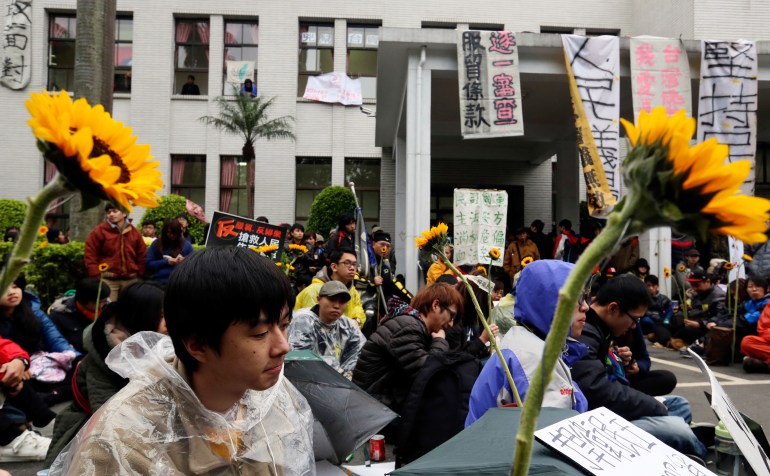
How later resigned and supported student activists nine months later after the bill was rushed through the legislative review process by Ma’s China-friendly KMT. That student movement became what is now known in Taiwan as the Sunflower Movement, or the 318 student movement, commemorating the day the 23-day occupation of the legislature began.
The movement helped pave the way for the Democratic Progressive Party’s (DPP) presidential and legislative victories in subsequent elections and reinvigorated the island’s politics with a new, younger generation of politicians and parties.
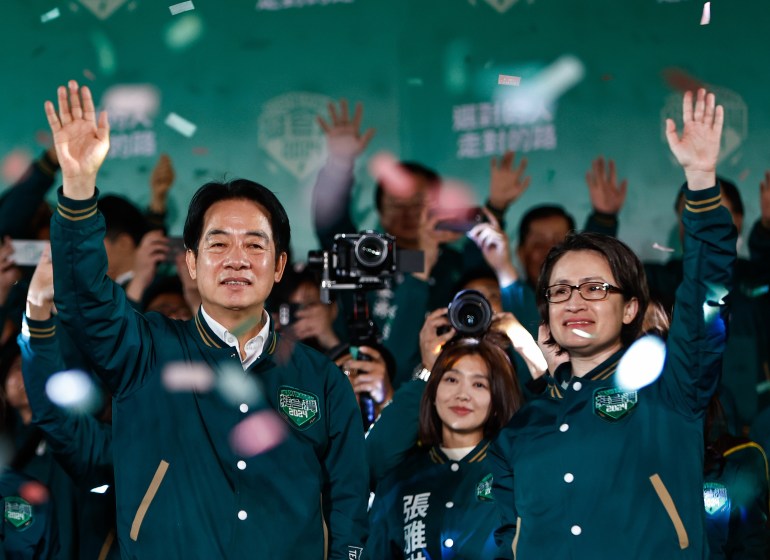
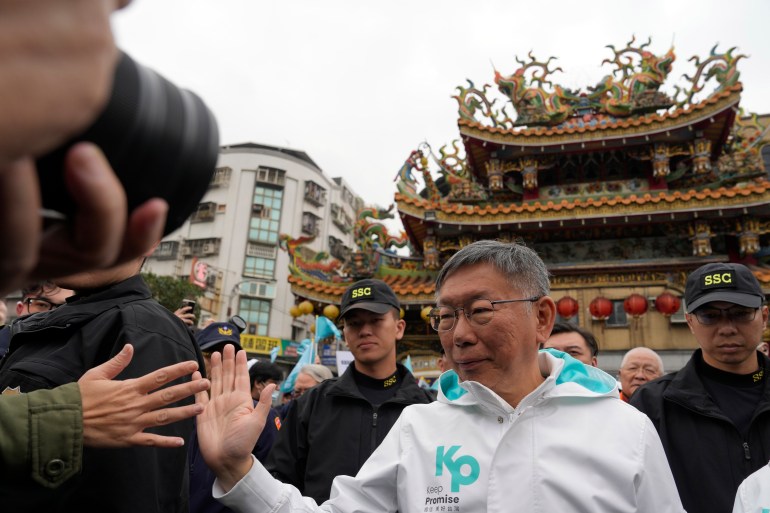
But in this year’s election, many former activists and movement parties lost in their districts. Ko Wen-je’s Taiwan People’s Party (TPP), which proved popular among Taiwanese youth as a pragmatic, anti-establishment choice beyond typical political divides, replaced the Sunflower-era New Power Party as the third most-represented party in the legislature with eight seats.
So what has changed in Taiwan since How alerted the public to the CSSTA? In his new book, Taiwan Unbound: A New Chapter, How explains the dissonance between generations in Taiwan as a metaphor for the island nation’s obedient, unmoving mountains and the adaptive, unconfined sea.
How, a child of Chinese immigrants to Korea, moved to Taiwan when he was 18 and built a successful career in the publishing industry. Today, he is the founder of the award-winning publishing house Locus Publishing, chairman of the Taiwan International Book Fair Foundation, and a passionate participant in initiatives across civil society. And despite his support of young activists and his previous tenure under Ma, he says he has no loyalties to any party.
“I’m a citizen. We are the owners of this country,” he said. “So we have to monitor (the government). Otherwise, who will watch them?”
Al Jazeera spoke with How on the movement’s 10-year anniversary to learn more about contemporary Taiwanese politics and the resonance – or lack thereof – of the Sunflower Movement with Taiwan’s youngest generation.
This interview has been edited for length and clarity.
Al Jazeera: Why did you decide to alert the public about the CSSTA?
Rex How: It was June 2013. I read the newspaper and I found there was news that the government is going to allow mainland China printers to come to Taiwan, they could invest in Taiwan to do printing. So I was very surprised. And at that time, I was the adviser to President Ma Ying-jeou. I never heard that he had such a plan and no one in the government mentioned that they were going to sign a special agreement with China. So I wrote a letter to the president and CC’d the letter to the foreign minister. I told them that it was a totally wrong decision. And it’s very important that I need to talk to them, I want to let them know why it’s so dangerous for Taiwan publishing and even freedom of speech. But I didn’t get any reply from President Ma or anyone in the cabinet.
And then again, I read news that said very soon, our government will open many doors for different areas of Chinese industry to invest in Taiwan. I got so anxious, so I kept asking. And one day I had a talk with the minister of culture at that time with some other publishers. We asked her, what is this agreement about and what is going to happen? And she said even she didn’t know.
After which I spoke with the minister with out portfolio and I requested when it was going to be signed. He mentioned in Shanghai, on the night of the twenty first of June of 2013. So I noticed that there was nothing I might do. I can solely write an article to publish on my Fb and alert the folks that there are solely 24 hours left for us to specific our disagreement with the federal government. So I wrote that article, and it bought an enormous response. But it surely didn’t work. They didn’t hear. So individuals got here out to the streets to protest and that was the start of the anti-CSSTA motion.
Al Jazeera: What sort of impression do you suppose the Sunflower Motion had on Taiwan in the long run?
Rex How: The Sunflower Motion was a abstract of all of the social actions that occurred in Taiwan earlier than. The KMT was the goal, however really, it gathered all of the momentum of different social actions prior to now years, together with the environmental one, together with ones concerning the media, land justice, human rights within the navy, and so forth.
So conserving Taiwan’s independence economically from China was on the floor. However on the backside, within the depths, I recognised that the motion was a couple of generational hole. The brand new era’s acknowledgement of the world, of economics, of Taiwan, every little thing is completely different from the era earlier than. In the present day after 10 years, the DPP appears to be away from the youthful generations. And that’s why Ko Wen-je claims (he’s) taking extra care of the youthful era.
Al Jazeera: Inform me a little bit bit about your new guide, Taiwan Unbound: A New Chapter.
Rex How: My guide began really 10 or 12 years in the past. At the moment, I noticed that so many social actions started towards the federal government and nearly each motion was both initiated or participated (in) by the younger individuals.
At the moment, the KMT authorities (noticed) that every one these actions towards them have been supported by the DPP, so that they thought that the younger individuals have been manipulated by the DPP. However I didn’t agree with that as a result of I watched all these actions evolve. And what I imagine is that there’s not a battle between political events. There are conflicts between generations.
(I noticed) these variations between the generations as a metaphor: the adjustments on the land seem to be the adjustments of the mountain and valley, the desert and grass. The mindset is completely different from mountain to valley, from grass to abandon, however they’ve one thing in frequent: They’re on the land. Till a sure time limit, that was the distinction between each era. However at a sure level, the adjustments of the generations grow to be completely completely different. So I exploit metaphors like from land to sea. I noticed that in Taiwan that time of time was 1987 as a result of that yr, we lifted martial regulation and Taiwan turned a democratic society or nation.
The which means of the lifting of martial regulation is the media turned free – we had newspapers booming, TV stations, cables and particularly radio stations. We are able to hear, we are able to hear, you’ll be able to watch and you’ll learn so many issues that have been taboo, that have been prohibited earlier than. So it’s a totally completely different world, Taiwan after 1987. I assumed individuals born after that have been like individuals within the sea. The way in which to stay and survive within the sea is completely different from the best way to stay and survive on the land. On the land, you must train your legs. However within the sea, you must discover ways to swim, how you can sail a ship, not solely to run up the hills or stroll within the desert. So since 10 years in the past, I felt all these sorts of protest actions have occurred within the sea.
So the actual factor is how you can hear to those sorts of voices, which have been completely different from the earlier generations’; how you can acknowledge their wants, how you can acknowledge their anger. The KMT didn’t discover this. They didn’t settle for this, they solely thought that every one these younger generations have been risen by the DPP. So eight years in the past, within the election, they only collapsed. That they had a giant loss to the DPP at the moment.
Al Jazeera: 10 years after the Sunflower Motion, many members of (the post-Sunflower motion social gathering) New Energy Occasion (NPP) joined the DPP. And on this election, the DPP tried to current itself as representing the younger individuals by working these Sunflower-era politicians. And so they weren’t all profitable. Do you suppose now there’s even a disconnect between the Sunflower era and the brand new younger era?
Rex How: Sure. If we proceed to make use of my metaphor of land and sea, 10 years in the past, the ocean was shallow. However after eight years, after two elections, there’s a deeper sea. Folks born after the yr 2000 are completely different from the individuals who have been born in 1987 like (these within the) Sunflower Motion.
Al Jazeera: So they’re tougher to achieve?
Rex How: They’re completely different. Similar to Lin Fei-fan (a former Sunflower Motion chief) instructed me, he doesn’t perceive what younger individuals beneath 30 are considering as a result of they’re utilizing completely different media. KMT, they use media like newspapers or TV; DPP, Sunflower Motion, the principle media they use are blogs and Fb. In the present day, younger individuals are not utilizing blogs and Fb, they’re utilizing IG, YouTube, quick movies, TikTok. If you end up utilizing completely different media meaning that you’re in a distinct world … in my metaphor, younger individuals are within the deep sea, and they’re crying for assist that somebody might assist them to sail a ship, assist them survive within the sea. And no one got here to them apart from Ko Wen-je.
All the opposite candidates didn’t present (up) within the media that they’re utilizing. What Ko Wen-je did was sail a ship to the deep ocean, however he saved on altering his costumes to play completely different roles. You by no means know who he actually is, what he actually believes. What he mentioned within the night is completely different from the morning. Typically he says (President) Tsai Ing-wen is a troublemaker, however typically he says he’ll comply with her diplomatic insurance policies. However for the younger individuals, he’s the one candidate that they will attain, they will see, they will watch. And the techniques of Ko Wen-je are very intelligent. In my guide, I discussed that he employed six to seven YouTubers to assist him determine what he would say in the present day. The one factor he is considering is quantity on the web. So he doesn’t thoughts if he’s saying one thing completely different. So long as the quantity may be raised, he’s glad to do this.
Al Jazeera: Do you suppose that’s sufficient for the TPP to remain related in politics? He additionally campaigned on being this anti-establishment determine. However now, the TPP has eight seats within the legislature. They’re turning into a part of the institution, and so they’re going to must outline their values and vote on issues. Perhaps that may flip some voters away as a result of they heard him say one thing completely different?
Rex How: As you noticed, Ko bought the least votes in Taipei Metropolis. So all of the residents in Taipei, they knew what he did, who he was. So he can solely mesmerise individuals outdoors of Taipei. There’s a saying that “all the Ko haters have been as soon as Ko followers”.
I don’t know if he’ll final. I solely know that I don’t suppose it’s actually a celebration. It’s a one-man social gathering or one-man present of Ko Wen-je. In the long term, I actually don’t suppose (the TPP will final) due to Ko Wen-je’s mindset, he has an emperor’s mindset. He admires Mao Zedong – you realize that, proper? And when he bought elected the primary time 10 years in the past as Taipei mayor, he went on a pilgrimage to Yan’an. He has a really pleasant mindset towards China.
Al Jazeera: There haven’t been many large scholar actions prior to now a number of years. There hasn’t actually been one thing just like what occurred in Hong Kong in 2019, or in Taiwan in 2014, this type of rapid existential menace to Taiwan, in contrast to throughout the Sunflower Technology. Do you suppose that will have additionally helped Ko Wen-je and harm the DPP?
Rex How: Individuals are very straightforward to neglect. So some younger individuals in the present day, possibly they forgot, or they even didn’t know what occurred in Hong Kong 4 years in the past. Another excuse is that as a result of the DPP received the election 4 years in the past by elaborating on this level, some individuals are criticising them like hey, you don’t know the rest, possibly the DPP is nice at utilizing sort of fears however they didn’t pay that a lot consideration to the younger era.
However I believe that’s a mistake. We must always at all times let individuals know that each election in Taiwan is said to China. There may be at all times an invisible candidate – China – that’s at all times invisible however collaborating. Twenty years in the past, in 1996, they used bombs, missiles to threaten us. After which they tried to make use of the cash to purchase us like what they did in Ma Ying-jeou’s authorities. And now, they’re utilizing cognitive warfare. Cognitive wars have been omnipresent on this election.